Value hunting: What wine and links golf have in common
A few years ago, in the midst of a pandemic lockdown, I went from keen to enjoy a good glass of wine at a restaurant to pretty curious about wine. When in-person classes resumed post-lockdown, I registered for the Wine & Spirit Education Trust (WSET) Level 1 tasting course.
I quickly learned both what I like and don’t like and, more importantly, acquired the vocabulary around those preferences. On week one, the instructor gauged our interest in five different well-known varietals. The class uniformly answered with what they thought they were supposed to like. White Zinfandel isn’t classy, so it got a unanimous thumbs down. Langhe Nebbiolo is Italian and seems fancy — despite being one of the most tannic sips any of us had ever had (and a fairly unpleasant experience without food). It got a round of thumbs up. Our teacher’s goal was to show that there’s a time and place for every wine. Just like a White Zinfandel might be perfect in a hot tub with your friends on vacation, not all pricey Italian bottles are great in any situation.
The more I learned, I couldn’t help but recognize the similarities between wine and links golf.
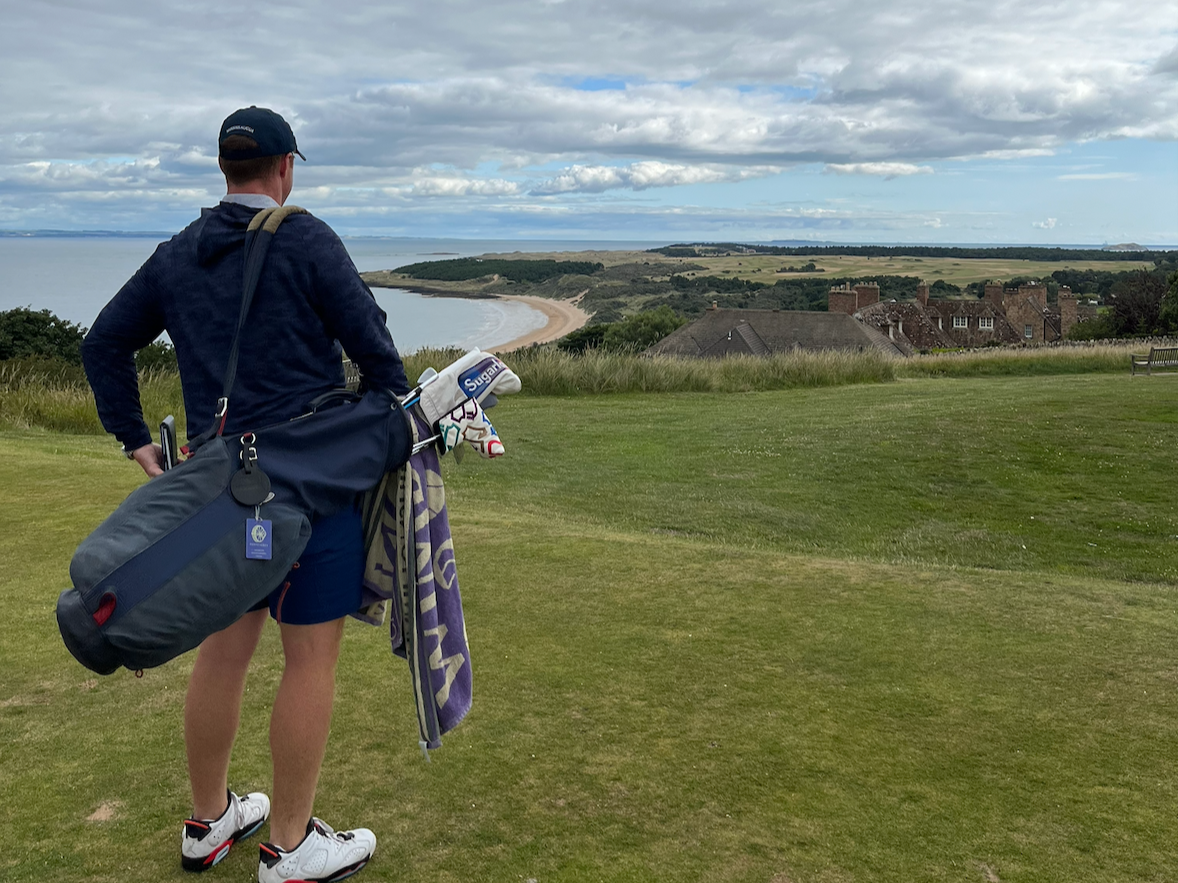
Nick looks out over neighbour Muirfield, from the 6th tee on Gullane no. 1.
Value hunting is harder than ever
One of the thrills I got from my newfound WSET knowledge was finding a wine that punched above its weight. First, it was Chateau de Sancerre, a ~$35 bottle of 100% Sauvignon Blanc from the Loire Valley that I found far tastier than its sticker price. I was equally excited to find a $28 bottle of Pascal Jolivet Attitude — from the same grape and region. It was a great baby Sancerre for exceptional value. I was disappointed when these bottles jumped to over $50 within just a few years, and I learned the double edged sword of discovery: it’s rarely just you that’s on to the trend.
The golf market has been subject to similar price increases in recent years. Green fees to top courses in the British Isles jumped by 20% from 2022 to 2023, then by another 20% in 2024, and again in 2025, representing a nearly 73% total rise over just three seasons. And this trend isn’t unique to the top end of the market. Multiple charming links that cost £100 a few years ago are charging closer to £200 now. The US is no different, with desert resort golf in Palm Springs and Scottsdale regularly reaching $400 USD and a round at Bandon, Sand Valley, Cabot, or Streamsong exceeding $350 in peak season.
The Pascal Jolivets have been discovered, and being a value hunter is getting trickier, but it still exists.
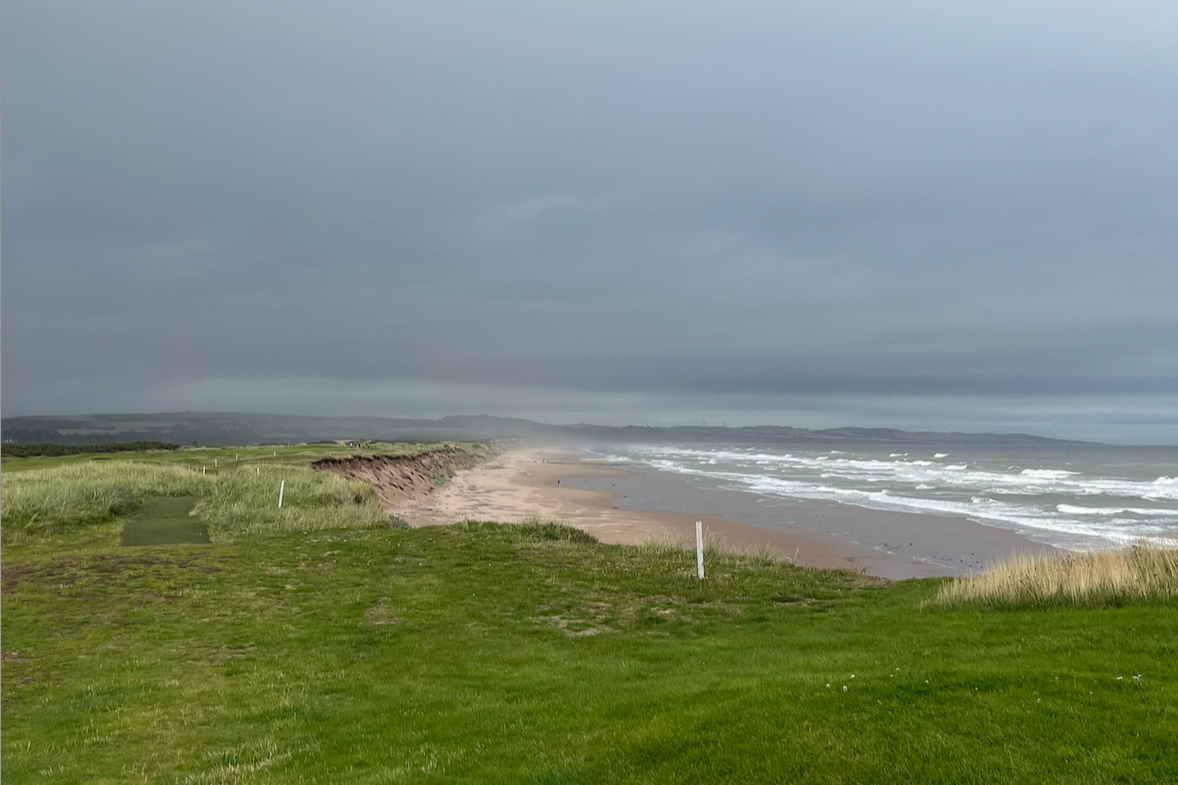
The coastline along Montrose Golf Links is eroding quickly—but as long as it lasts, this gem is less than 100gbp to play.
Don’t sleep on the short courses
One place where value still exists in Scotland is the sporty course. This isn’t a term you hear on this side of the Atlantic, mainly because sporty courses don’t really exist in North America.
When we think of a short course, we picture executive golf courses — par 31 9-holers that are great places to learn as a kid, or to knock it around in sandals on vacation, but not suitable for Serious Golf Experiences.
In Scotland, there are plenty of courses under 6,200 yards that most tourists would skip (or at least look at skeptically). But 5,500 yards is all you could have bargained for back in 1891 — and a 360 yard par 4 used to be driver-3w in the wrong wind. These courses weren’t built as cheap afterthoughts for kids to learn on or to cut corners on maintenance and make a buck charging a $45 green fee. They’re often very legitimate layouts featuring top tier architecture and the same springy links turf you’re seeking out at the big name courses. You’ll likely have drivable par 4s and 3-shot par 5s in the same round — and you’ll no doubt find yourself needing every club in your bag.
Kilspindie Golf Club, Gullane no. 3, and even the Eden Course in St Andrews are all examples of sporty courses with great value. At an average green fee under £100 they are a perfect compliment to the abundant £200+ rounds in the region, and with world-class architects (Willie Park Jr. x2; Harry Colt) they are today’s golf equivalent of that baby Sancerre.
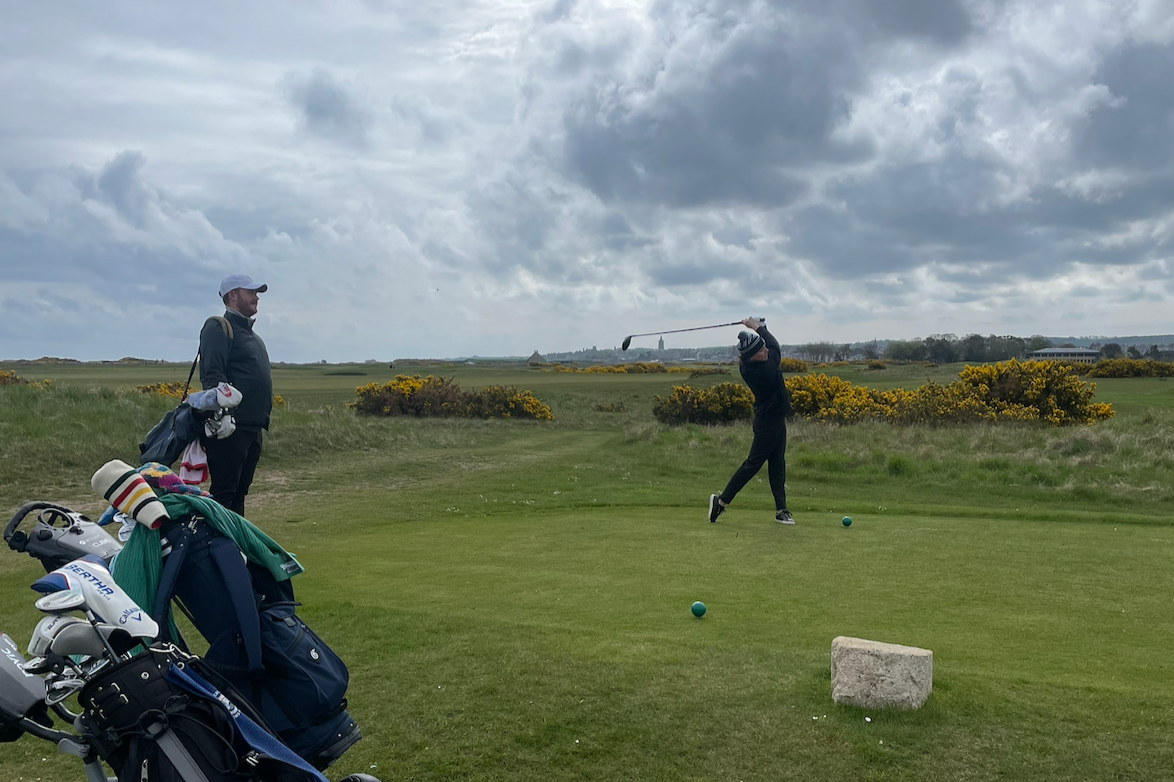
Haley tees off on the Eden Course—the most underrated of the St Andrews Links Trust options.
Look beyond the bucket list
Another principle that I reiterate often is to look past the Open rota and consider the next level of courses — or even a level below that. Not every golf destination’s third tier is worthy of a trip, but in the UK, they often are. And just like nobody wants to drink that tannic Langhe Nebbiolo all night, mixing in variety gives you more appreciation for links golf throughout your trip.
For example, Trump Turnberry is now charging £600+ per person for prime time tee access, and nearby Royal Troon is close to £400 per person. Those courses are spectacular, and if recreating the Duel in the Sun at Turnberry or Phil and Henrik’s 2016 duel down the stretch at Royal Troon is important to you, go for it and don’t look back. Both will be a special day.
On the other hand, you could make Prestwick your spendy round in that region (at £325), and then tack on Prestwick St Nicholas and Western Gailes — three great rounds for just a little more than the cost of Turnberry on its own.
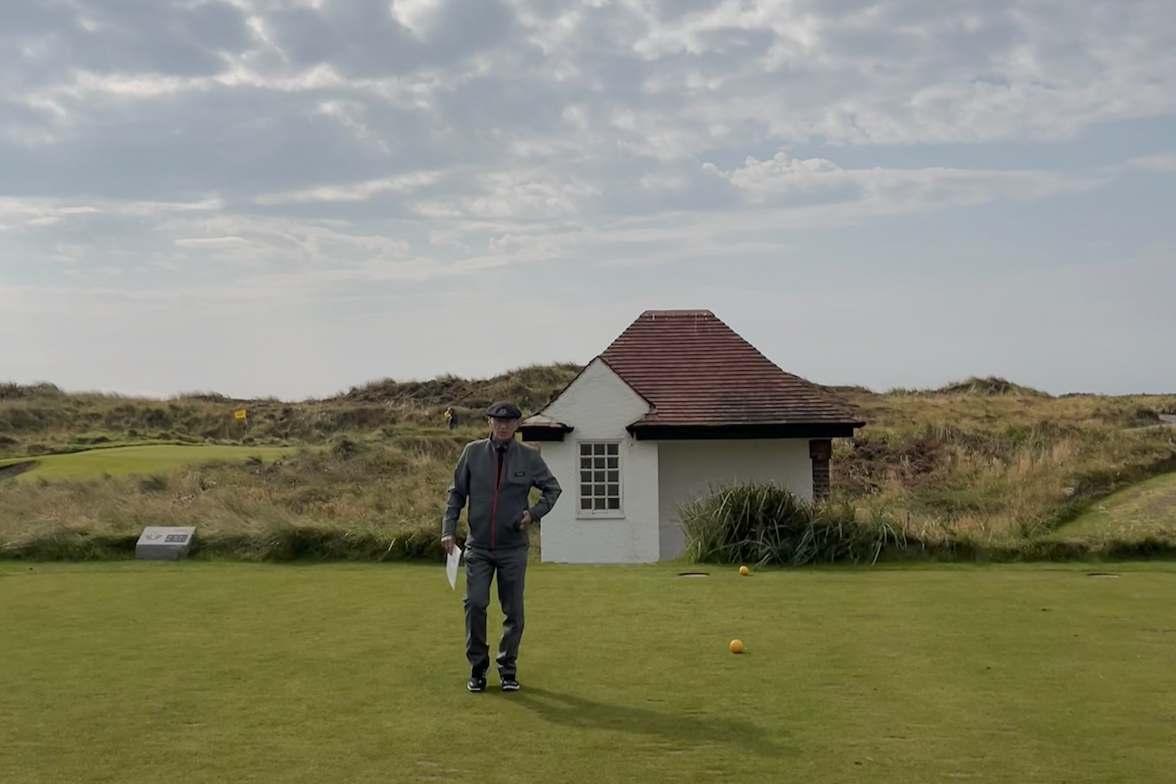
You can play Prestwick, Prestwick St Nicholas, and Western Gailes (pictured) for slightly more than a single round at Turnberry.
The search is half the fun
If there’s one thing I’ve learned through my love of both wine and golf, it’s that finding those hidden gems is often ten times more satisfying than experiencing what’s unanimously top ranked in either category.
If links golf gets into your veins even a fraction of the way it has for us, trying to find the next relatively underpriced round is going to become as important to you as finding that next bottle of reasonably-priced, mineral-y white wine was for me.
Happy hunting.
Want some help with your hunt? We love finding high value golf in the British Isles and beyond. Book some time with us.